
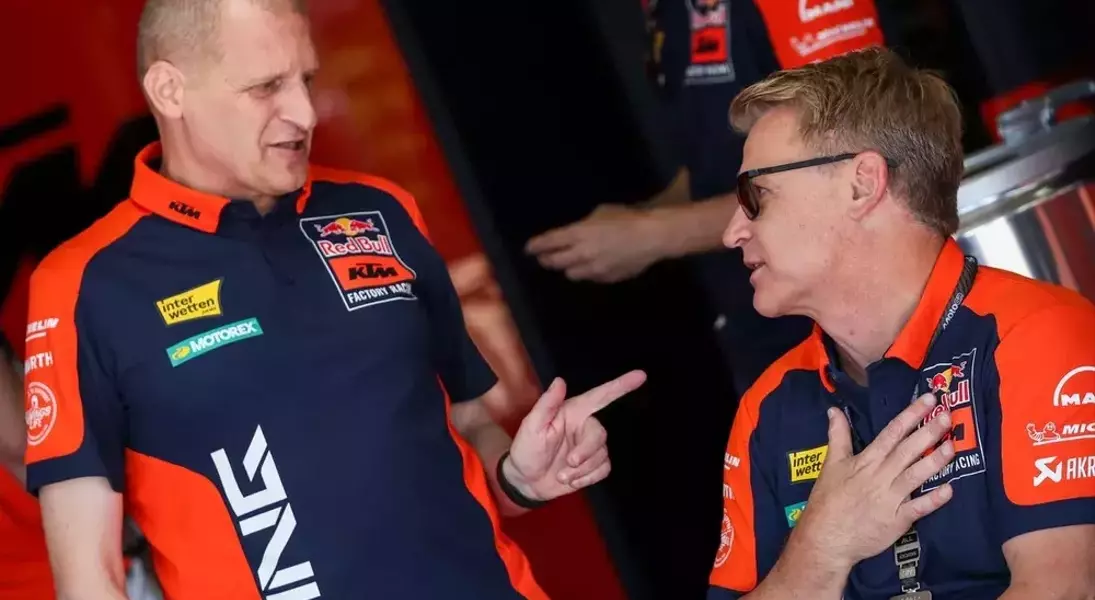
KTM's motorsport director, Pit Beirer, recently acknowledged a persistent problem with the engines of their RC16 MotoGP bikes and sought special permission to investigate the issue. This comes after a series of mechanical failures throughout the 2026 season, most notably a severe incident in Barcelona where Alex Marquez collided with Pedro Acosta's malfunctioning factory RC16 at high speed, highlighting significant safety concerns for riders.
Despite the critical safety implications, current MotoGP regulations, which enforce an 'engine freeze,' prevent KTM from disassembling their engines to diagnose and rectify the problems. Beirer appealed to rival manufacturers, emphasizing the safety aspect, hoping to gain their unanimous consent to bypass these restrictions. However, after several meetings during the Sachsenring weekend, it was understood that only Aprilia extended its support, with other manufacturers like Ducati, Honda, and Yamaha remaining unpersuaded due to the competitive nature of the championship and rules regarding engine allocation.
MotoGP rules dictate that manufacturers with category D concessions, such as KTM, must seal their engines before the season's commencement, providing an identical reference unit to IRTA's technical department. Once sealed, an engine cannot be opened or dismantled without the collective approval of all members of the MSMA (Motorcycle Sports Manufacturers' Association). This rigid policy, combined with the tight championship battle, means that competitors are reluctant to grant any perceived advantage, making KTM's bid for intervention a complex and challenging one.
The situation faced by KTM underscores the delicate balance between competitive integrity and rider safety in professional motorsport. While the rules are designed to ensure fair competition and control costs, unforeseen technical issues that compromise safety should prompt a collective reevaluation and a spirit of collaboration within the sport. Upholding safety standards is paramount, and future regulations might need to incorporate more flexible mechanisms to address critical reliability issues without unduly penalizing teams or endangering athletes.