Lifestyle
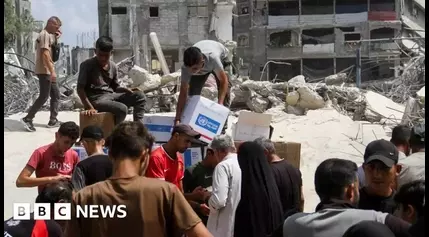
Protecting the Lifeline: The Challenges of Humanitarian Aid Delivery in Gaza
The UN food agency's decision to pause the movement of its staff in the Gaza Strip after its team came under fire near an Israeli checkpoint has raised concerns about the deteriorating security situation and the growing obstacles to delivering vital humanitarian aid in the region. The incident, in which one of the WFP's armored vehicles was directly hit by gunfire, highlights the precarious and ever-shrinking humanitarian space in Gaza, where increasing violence is compromising the ability of aid organizations to fulfill their crucial mission.Securing the Humanitarian Corridor: A Vital Yet Daunting Task
The Attack on the WFP Convoy: A Troubling Escalation
The recent incident involving the WFP convoy highlights the dangerous conditions that aid workers face in the Gaza Strip. Despite securing the necessary clearances and the vehicles being clearly marked, the convoy was targeted, with one of the armored vehicles sustaining multiple bullet hits. While no one was physically harmed, the attack serves as a stark reminder of the ever-present risks that humanitarian workers must navigate in order to deliver essential supplies to the people of Gaza.The WFP's decision to temporarily pause the movement of its staff in the region is a prudent measure to ensure the safety of its personnel. However, this pause in operations directly impacts the delivery of vital aid, further exacerbating the already dire humanitarian situation in Gaza. The agency's executive director, Cindy McCain, has rightly called for immediate action from the Israeli authorities and all parties involved in the conflict to ensure the protection of aid workers, emphasizing the unacceptability of such incidents.The Shrinking Humanitarian Space: Navigating the Challenges
The WFP's statement describing the "rapidly and ever shrinking humanitarian space in the Gaza Strip" underscores the mounting challenges faced by aid organizations in the region. The recent evacuation orders issued by the Israeli military, which affected 15 UN and NGO premises, as well as critical infrastructure like a water desalination plant and the main medical facility in the town of Deir al-Balah, have further restricted the ability of the international community to provide life-saving assistance.These disruptive actions, taken in the name of security operations against Hamas, have forced an estimated 1.8 million people to seek shelter within the increasingly limited humanitarian zones, which lack the necessary infrastructure and basic services to support such a large population. The UN's humanitarian office has expressed deep concern over the timing of these evacuation orders, as they coincide with the launch of a crucial polio vaccination campaign targeting 640,000 children in Gaza.Navigating a Volatile Landscape: The Balancing Act of Humanitarian Efforts
The challenges facing the humanitarian community in Gaza are multifaceted and complex. While the Israeli military has emphasized its efforts to coordinate with international organizations to preserve the activities of vital centers, the reality on the ground suggests that the protection of civilian lives and the ability to deliver aid are being compromised.The UN's humanitarian chief, Gilles Michaud, has highlighted the "extremely, extremely difficult" conditions that have made it increasingly challenging for aid organizations to carry out their work effectively. The constant threat of violence, the disruption of critical infrastructure, and the restrictions on movement have all contributed to the shrinking humanitarian space, forcing aid agencies to navigate a volatile landscape in their efforts to provide life-saving assistance to the people of Gaza.Despite these obstacles, the UN and other international organizations remain committed to their mission, working tirelessly to find alternative locations and routes to continue their activities. The appeal for humanitarian pauses in the conflict to allow for the successful rollout of the polio vaccination campaign is a testament to the determination of the humanitarian community to address the pressing needs of the population.Safeguarding the Future: The Imperative of Protecting Humanitarian Aid
The attack on the WFP convoy and the broader challenges facing humanitarian efforts in Gaza underscore the critical importance of ensuring the safety and security of aid workers. The ability to deliver essential supplies and services to the people of Gaza is not only a moral imperative but also a fundamental human right. Protecting this lifeline is crucial, not only for the immediate alleviation of suffering but also for the long-term resilience and well-being of the entire population.The call by Cindy McCain for the Israeli authorities and all parties involved in the conflict to act immediately to ensure the safety and security of aid workers must be heeded. Failure to do so not only jeopardizes the lives of those on the ground but also risks further compromising the delivery of vital humanitarian assistance, with devastating consequences for the people of Gaza.As the conflict continues, the international community must remain steadfast in its commitment to upholding the principles of humanitarian aid and protecting those who risk their lives to provide it. Only through a collective effort to safeguard the humanitarian corridor can we ensure that the people of Gaza receive the support they desperately need, paving the way for a more stable and secure future.